Contribution by Jeff Norman B.A (Hons), March 2025
Beware the impact of unintended consequences. The relaxation of the immigration rules to fill thousands of vacancies in the social care sector has resulted in a significant increase in the threat of being subjected to modern slavery, with a growing incidence of exploitation.
On 24 January 2022, a statement of changes to the immigration rules was published, confirming that care workers would be added to the UK’s list of ‘Shortage of Occupation’. Care workers from overseas therefore became eligible to apply for Skilled Worker visas under the new, points-based immigration system.
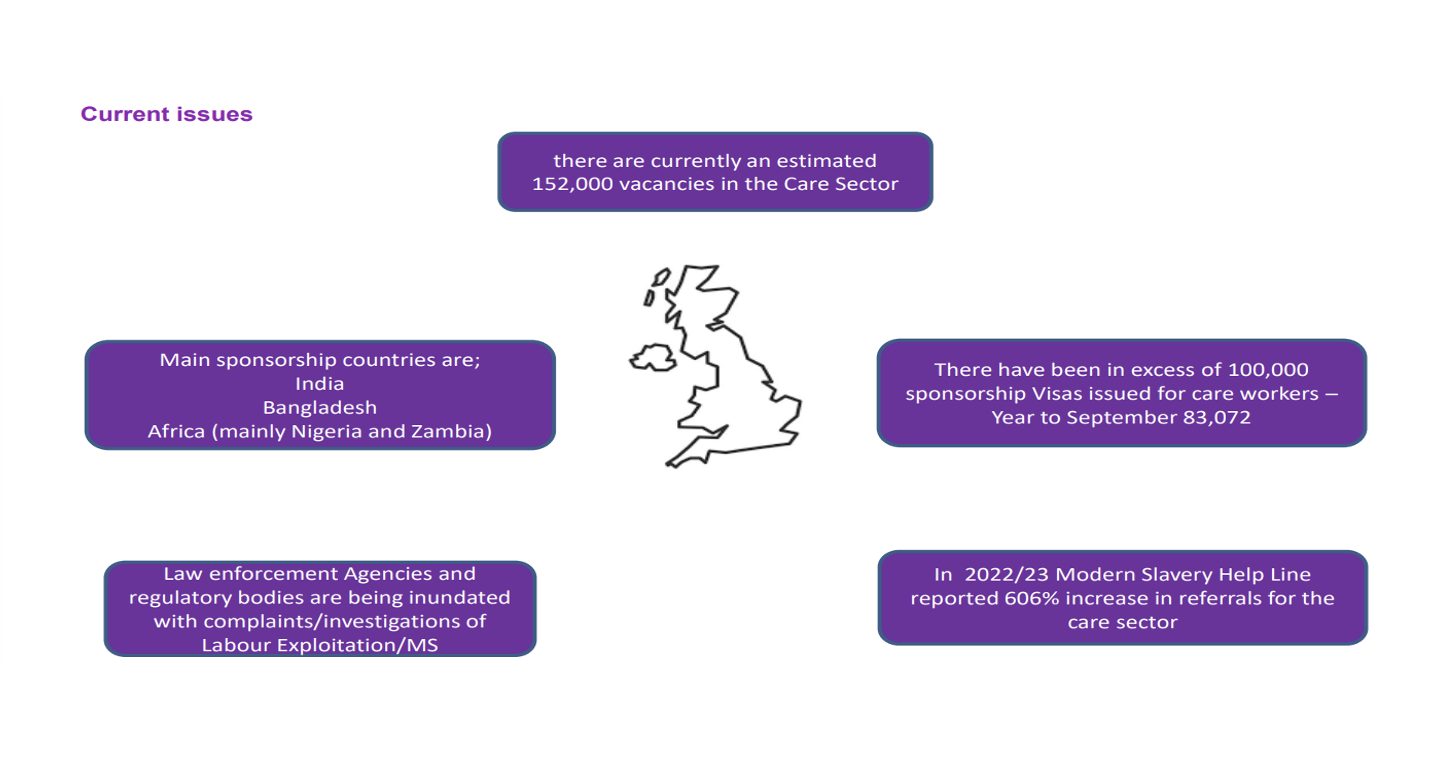
In August 2022, it was reported that staff shortages in the adult care sector in the UK had risen by more than 52% from the previous year to 152,000 vacancies, accounting for vacancies in one in ten social care posts.
Where labour shortages exist, there is an increased risk of exploitation, and the likelihood of opportunists using the situation for their own financial gain.
At least 800 people working in care homes or providing domiciliary care were reported as potential victims last year, more than ten times the number recorded before the government’s visa scheme.
As of 4 December 2023, the Government proposed changes to the visa status of overseas workers, preventing them being accompanied family members, as well as an increase in the wage threshold required, which will further impact on care workers.
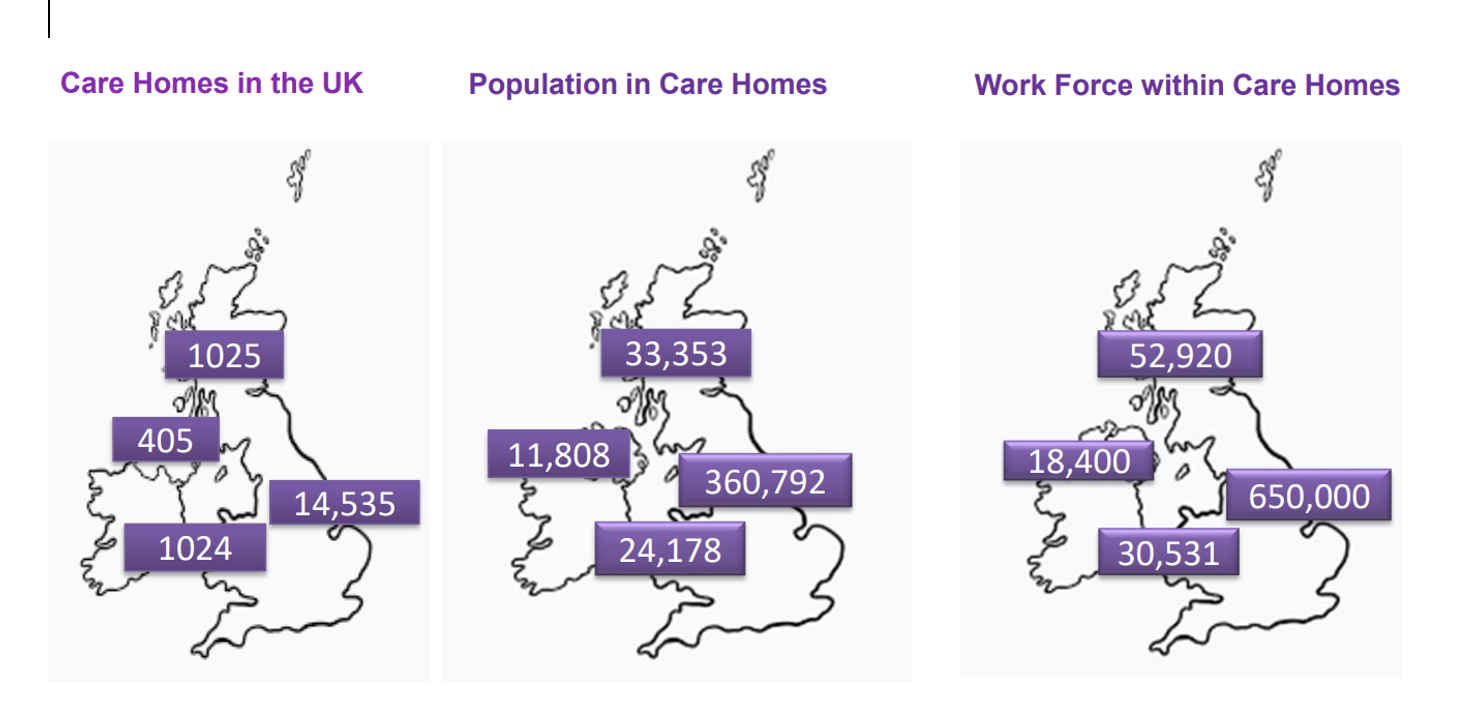
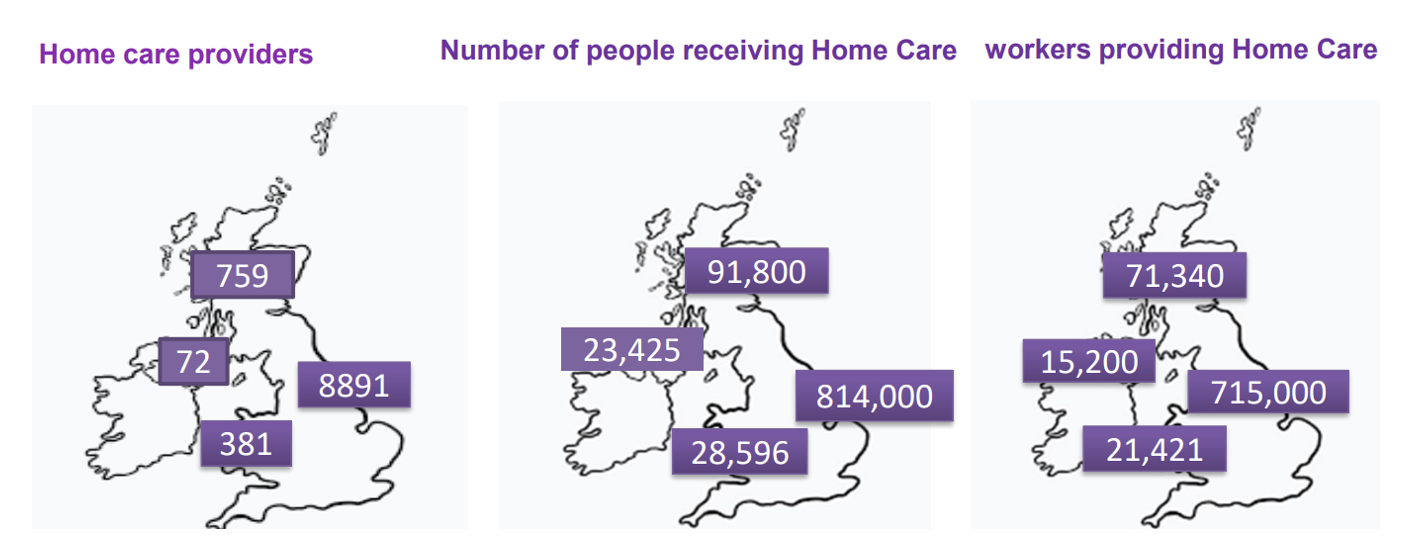
The graphics below, courtesy of the Gangmasters and Labour Abuse Authority (GLAA), provide an indication of the scale of the sector in the UK.
Wales–specific information reveals that:
24,178 people are receiving residential care provided by 30,531 carers in 1,024 residential homes; and
28,596 people are receiving home care provided by 21,421 carers through 381 care providers.
The range of exploitation taking place is summarised below, and includes:
- Excessive fees being paid either to ‘Agents’ in the home country – ranging from £10,000 –£20,000 – or directly to their UK sponsor, which is illegal, or
UK-based agencies illegally charging the same excessive fees for visas.
- Upon arrival in the UK, the promised work does not materialise; with either no job at all or a reduced number of hours than those contracted, or they are passed on to other agencies both in and out of the care sector.
- Being forced to sign ‘waiver’ documents to enable them to work excessive hours, or have such documents fabricated on their behalf.
- Being forced to work excessive hours, whilst not being paid in full, and/or at a rate below the National Minimum Wage.
- Not being paid for travel to and from appointments with domiciliary care clients during the working day.
- Placed or forced to live in overcrowded, poor quality accommodation by their sponsor/exploiter and charged excessive rent, or having been promised accommodation, finding there is none when they arrive.
- Unqualified carers having their documentation falsified by the sponsor/exploiter, placing those they care for at risk.
- Threatened with the removal of sponsorship and deportation if they complain; employment being terminated/manufactured, which negates their visa. They then have 60 days to find an alternative sponsor at a time when they are most likely to be homeless and without funds.
- Many victims have sold all of their possessions to get to the UK and are often in debt bondage to money lenders. In cases where they have brought their dependents with them, their plight is made worse.
- Churches and charities (food banks etc) report an increase in carers presenting as destitute.
Current & Future Adult Care Sector Landscape
● In 2022/23, the majority (88%) of the workforce were employed on permanent contracts. Half of the workforce (52%) usually worked full-time hours with the remainder part-time.
● Around one fifth of the workforce was recorded as being employed on zero-hours contracts (22% or 340,000 filled posts). This compares to 3.4% in the wider economy, according to the Labour Force Service (January – March 2023).
● Domiciliary care services saw the highest proportion of workers employed on zero-hours contracts (42%), especially among care workers.
● There are 1.52 million care workers in independent adult care – 88% (1,337,600) are on permanent or direct contracts, meaning there is 12% (182,400) supplied by agencies.
● There is a 48.7% turnover rate for staff in the care sector.
● It is estimated that in the next 10 years, there will be 400,000 people currently employed in the care sector who will reach retirement age.
● With the current demographic growth rate of an ageing population, it is estimated there will be a need for 440,000 extra carers.
Key Indicators (Red Flags) of Exploitation in the Care Sector
Excessive Fees – Skilled carers charged exorbitant fees for recruitment, accommodation and/or transportation to the UK.
Low Wages – Carers receiving wages well below the legal minimum wage, considering the long hours worked.
Confiscation of Documents – Employers or recruiters withholding identification documents, passports and/or visas to control workers.
Overcrowded Accommodation – Carers residing in overcrowded and sub-standard housing provided by their employers.
Inadequate Rest Breaks – Workers denied adequate rest breaks, working long hours and with little time off.
Language Barrier – Carers with little command of the English language facing difficulties in asserting their rights or seeking assistance.
Isolation – Carers being isolated from the wider community, including limited social interactions and freedom to leave their place of work or residence.
Fear & Coercion – Carers expressing fear, anxiety, or signs of psychological distress, often due to threats or coercion.
The care sector is clearly a significant area of exploitation, and more needs to be done to address the threat. Safeguarding against exploitation requires a multi-faceted approach involving individuals, families, care providers, and regulatory bodies working together to create a safe and supportive environment for vulnerable adults.
By: Jeff Norman: Jess is a modern slavery specialist at ‘Stop Slavery Today’, focusing primarily on child criminal exploitation and Senior Strategy and Development Officer at Cardiff Council with a focus on supply chain management and due diligence.
Leave a Reply